Mercado Medellín Mexico City
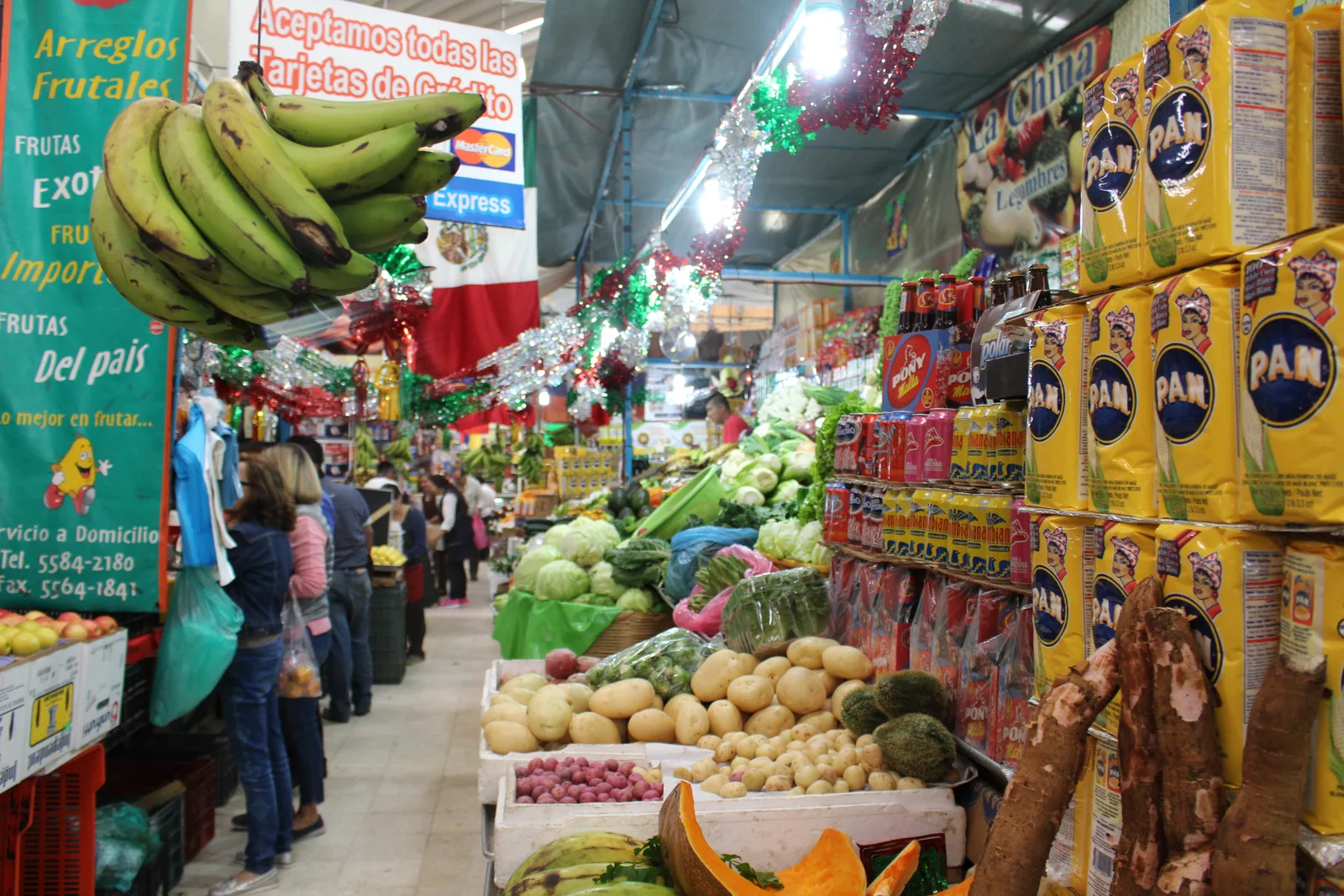
Mercado Medellín is the public market of Roma Sur and the one place in Mexico City where you can shop all of Latin America under one roof: arepa flour, Venezuelan rum, Peruvian ají and Cuban malt sodas, next to fresh fruit, flowers, piñatas and lunch counters. This guide covers where it is, when it opens, what to buy, where to eat and how to make the most of a visit.
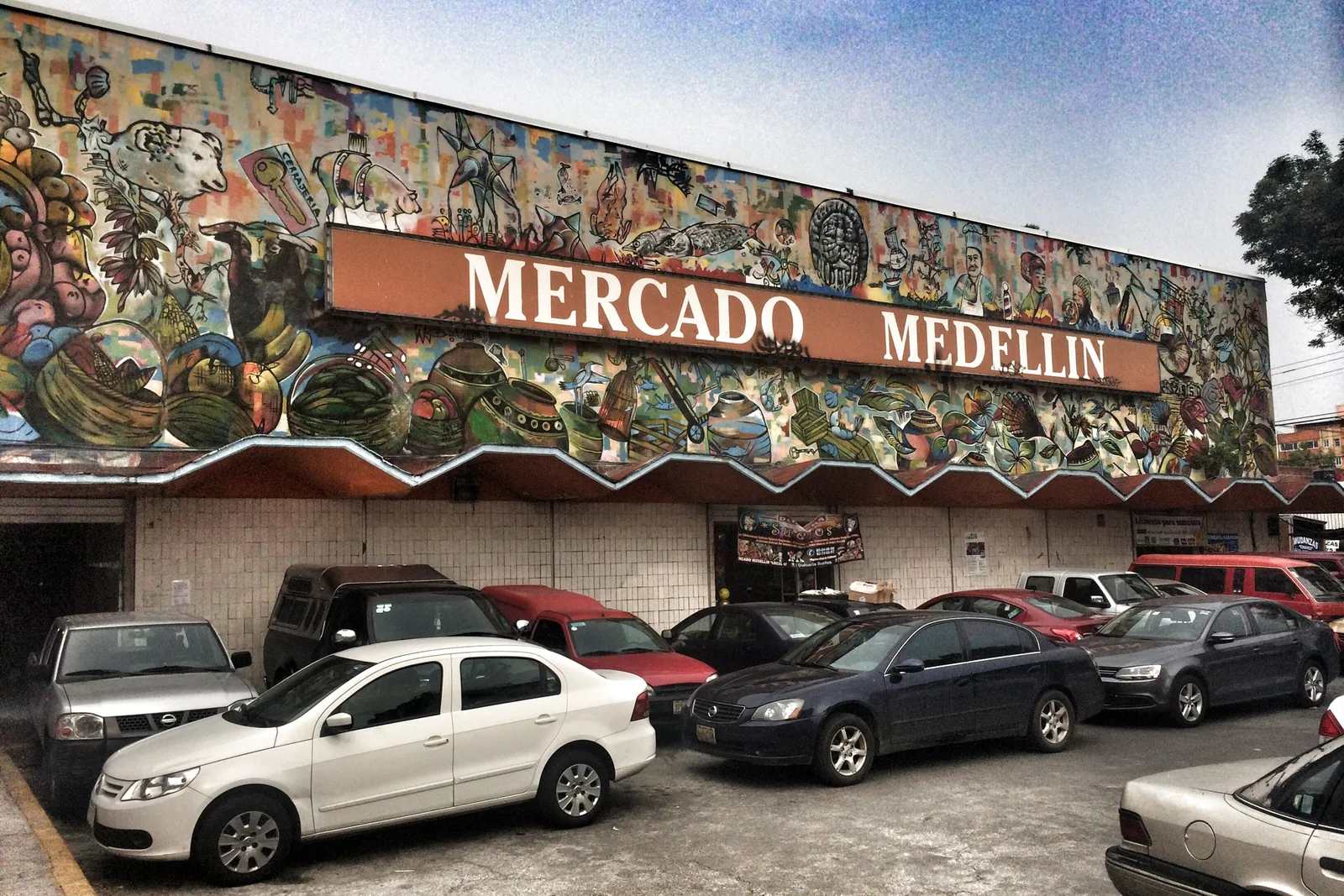
Mercado Medellín, also called Mercado de Medellín, is the neighborhood market of Roma Sur and one of the best-loved markets in Mexico City. From the outside it is a low building covered by a huge mural; inside are more than 500 stalls where you can buy the week's tomatoes, a bottle of Colombian aguardiente, a piñata and a bunch of flowers in the same trip.
What makes it different is the mix. Since the 1980s, vendors from Colombia, Cuba, Venezuela, Peru and other countries have set up shop here and brought their products with them. Today it is where Latin Americans living in Mexico City go when they miss home, and where locals go for things the supermarket doesn't carry.
A quick note if you searched from the US: this market is not in Medellín, Colombia. It is in Mexico City and takes its name from Calle Medellín, the street it sits on. This guide covers where it is, when it opens, how to get there, what to buy by country, where to eat, which seasons are worth planning around and what it is like to live a few blocks away.
Mercado de Medellín (Mercado Melchor Ocampo)
- Where
- Campeche 101, esquina con Medellín
- Roma Sur, Cuauhtémoc
- Phone
- 55 3142 2660
- Hours
- Daily, about 8 a.m. to 6 p.m.
What Mercado Medellín is
It is a municipal public market, like La Merced or San Juan, but on a neighborhood scale: you can walk all of it in a morning. Its official name is Mercado Melchor Ocampo, after the 19th-century liberal politician who served under Benito Juárez; everyone calls it Medellín after the street.
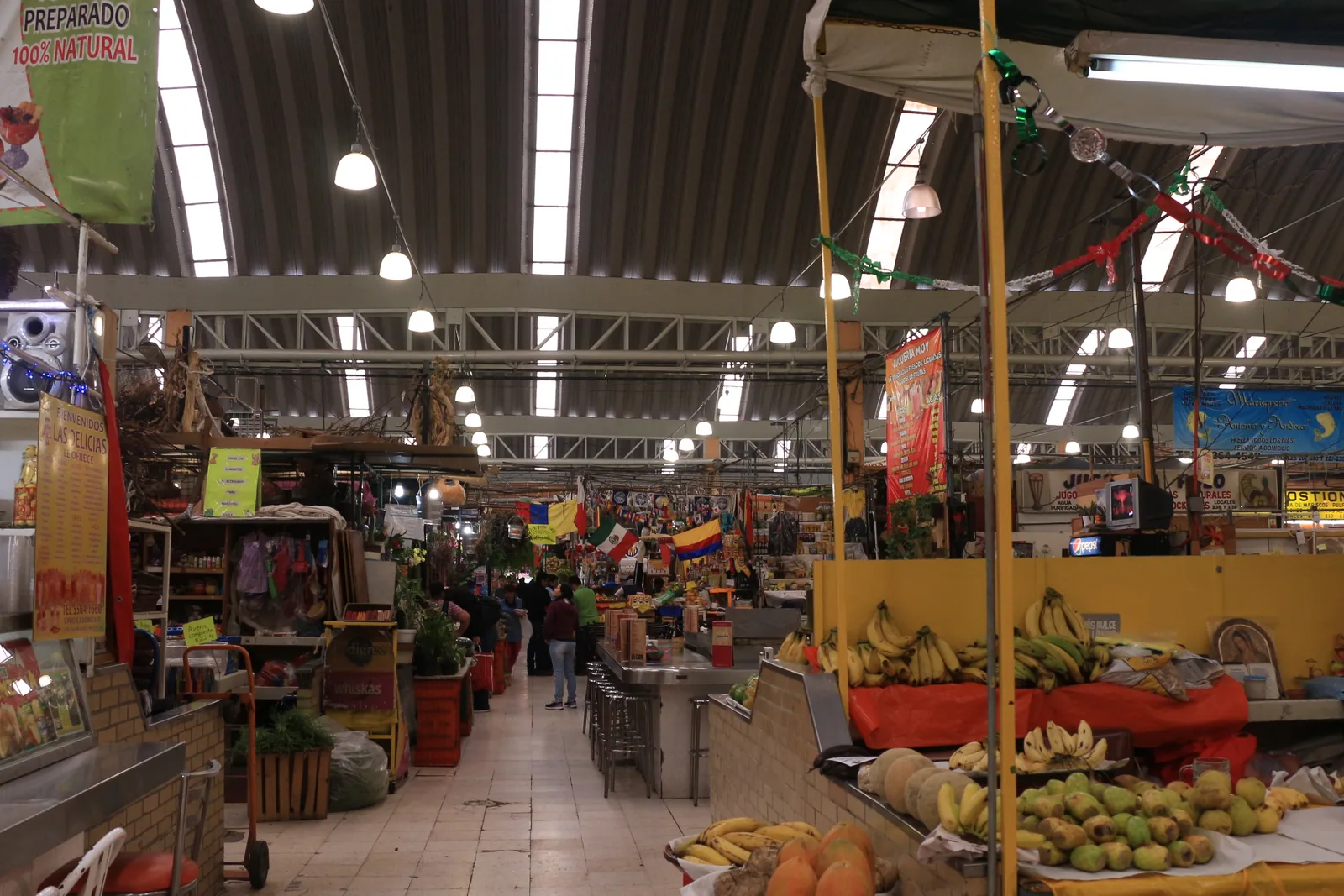
Unlike a food hall, this is where people do their everyday shopping. There are fruit and vegetable stalls, butchers, poultry and fish counters, dried chile and spice vendors, florists, piñata makers, lunch counters, juice bars, housewares and even a barber. On top of that, the center of the market is packed with imported goods from across Latin America.
That mix earned it the nickname "La Pequeña Habana," Little Havana, even though Cuba is only part of the story. Colombians are probably the most visible community: yellow, blue and red flags hang over several stalls and you will hear vallenato in the aisles.
Where Mercado Medellín is
The address is Campeche 101, on the corner of Calle Medellín, in Colonia Roma Sur, in the Cuauhtémoc borough of Mexico City. The market takes up most of the block between Coahuila and Campeche streets; the Coahuila entrance is closest to the lunch counters. Some guides list it as Medellín 234, which is the same building seen from the other street.
It sits at the northern edge of Roma Sur, one block from Roma Norte, which starts across Coahuila. Avenida Insurgentes is about five minutes west on foot. If you are staying in Roma Norte or Condesa, it is an easy walk.
There is a parking lot in front of the mural facade, which is rare in this part of the city. On Saturdays it fills up by mid-morning.
“One aisle of Mercado Medellín holds more of Latin America than any other block in Mexico City.”
Mercado Medellín hours
The market is open every day, including Sundays and most holidays. Most stalls work from about 8 a.m. to 6 p.m.; juice bars start early, and the lunch counters hit their stride around 1 p.m. On Sundays many stalls close an hour earlier.
Published hours don't agree to the minute: some sources say 8 a.m., others 8:30, and closing ranges from 5 to 7 p.m. depending on the stall. If you are going for something specific, get there before 5 p.m.
- Monday to Saturday: about 8 a.m. to 6 p.m.
- Sunday: about 8 a.m. to 5 p.m. at many stalls.
- Best time to shop: 8 to 11 a.m., when everything is freshly stocked and there are no lines.
- Best time to eat: 1 to 4 p.m., when the seafood counters and fondas are in full swing.
How to get to Mercado Medellín
The easiest way is Metrobús Line 1, which runs along Insurgentes: get off at the Campeche stop and walk about five minutes east along Calle Campeche to the corner of Medellín.
By Metro, the closest station is Chilpancingo on Line 9, about ten minutes on foot. Centro Médico, on Lines 3 and 9, is about fifteen. You need a rechargeable Mexico City transit card for both.
From Condesa it is about fifteen minutes on foot across Insurgentes; from Roma Norte, about ten. There are Ecobici bike-share stations nearby. In an Uber or taxi, ask to be dropped at Campeche and Medellín.
| How | Where to get off | On foot |
|---|---|---|
| Metrobús Line 1 | Campeche stop, on Insurgentes | 5 min |
| Metro Line 9 | Chilpancingo station | 10 min |
| Metro Lines 3 and 9 | Centro Médico station | 15 min |
| Walking from Condesa | Across Insurgentes | 15 min |
| Walking from Roma Norte | Heading down to Coahuila | 10 min |
| Taxi or Uber | Corner of Campeche and Medellín | — |
History: from street market to Little Havana
Before there was a building, the area had a tianguis, an open-air street market where vendors set up with whatever they had. The current market was founded in 1964, in the years when the city built dozens of public markets to move commerce off the streets.
In its early years many of the vendors came from the neighborhood's Jewish community. The big change came with the 1985 earthquake, which hit Roma hard: several vendors left, and families from Colombia, Cuba, Peru, Venezuela and other countries took over stalls and began importing products from home.
That is how the market got the reputation it has today. Over the years more vendors arrived from other countries, and Medellín became a meeting point for Mexico City's Latin American communities.
What to buy at Mercado Medellín, by country
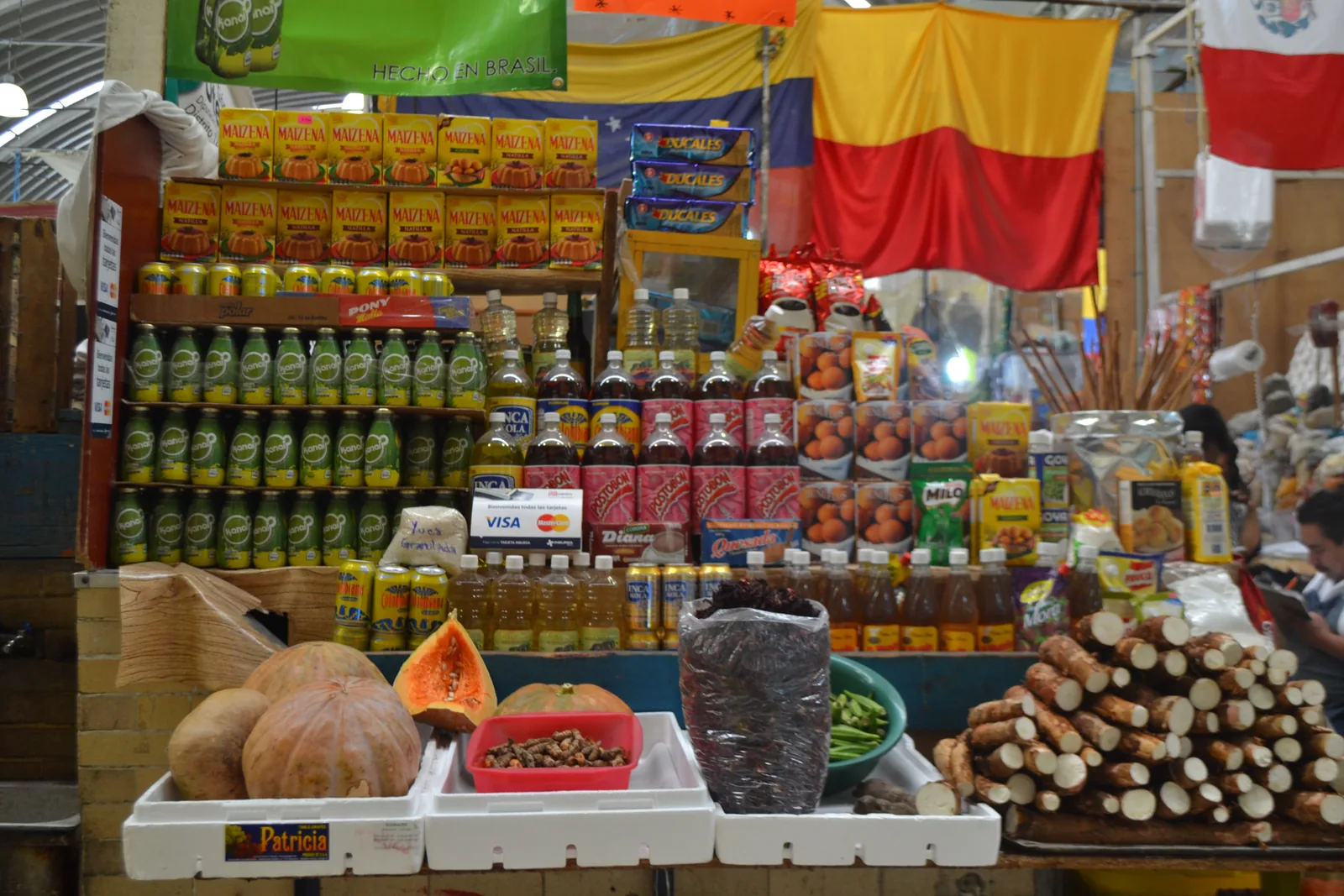
The imported goods are mostly in the center of the market, toward Calle Medellín. Stock changes with each shipment, but these are the staples:
| Country | What to buy |
|---|---|
| Colombia | Arepa flour, arequipe (dulce de leche), Sello Rojo and Juan Valdez coffee, drinking chocolate, aguardiente antioqueño, Viejo de Caldas rum, Postobón and Colombiana sodas |
| Venezuela | Santa Teresa rum, Frescolita soda and precooked corn flour for arepas |
| Peru | Pisco, ají pastes and sauces, Inca Kola and coca tea |
| Cuba | Malt sodas, Bucanero beer, rum and Cuban-style ice cream |
| Central America | Malta Gallo from Guatemala, Costa Rican coffee and Lizano sauce |
| Brazil, Argentina and Uruguay | Guaraná, Argentine sausages, imported cheeses and serrano ham at the deli counters |
| Tropical produce | Cassava, green and ripe plantains, and seasonal fruit that doesn't reach every market |
Where to eat at Mercado Medellín
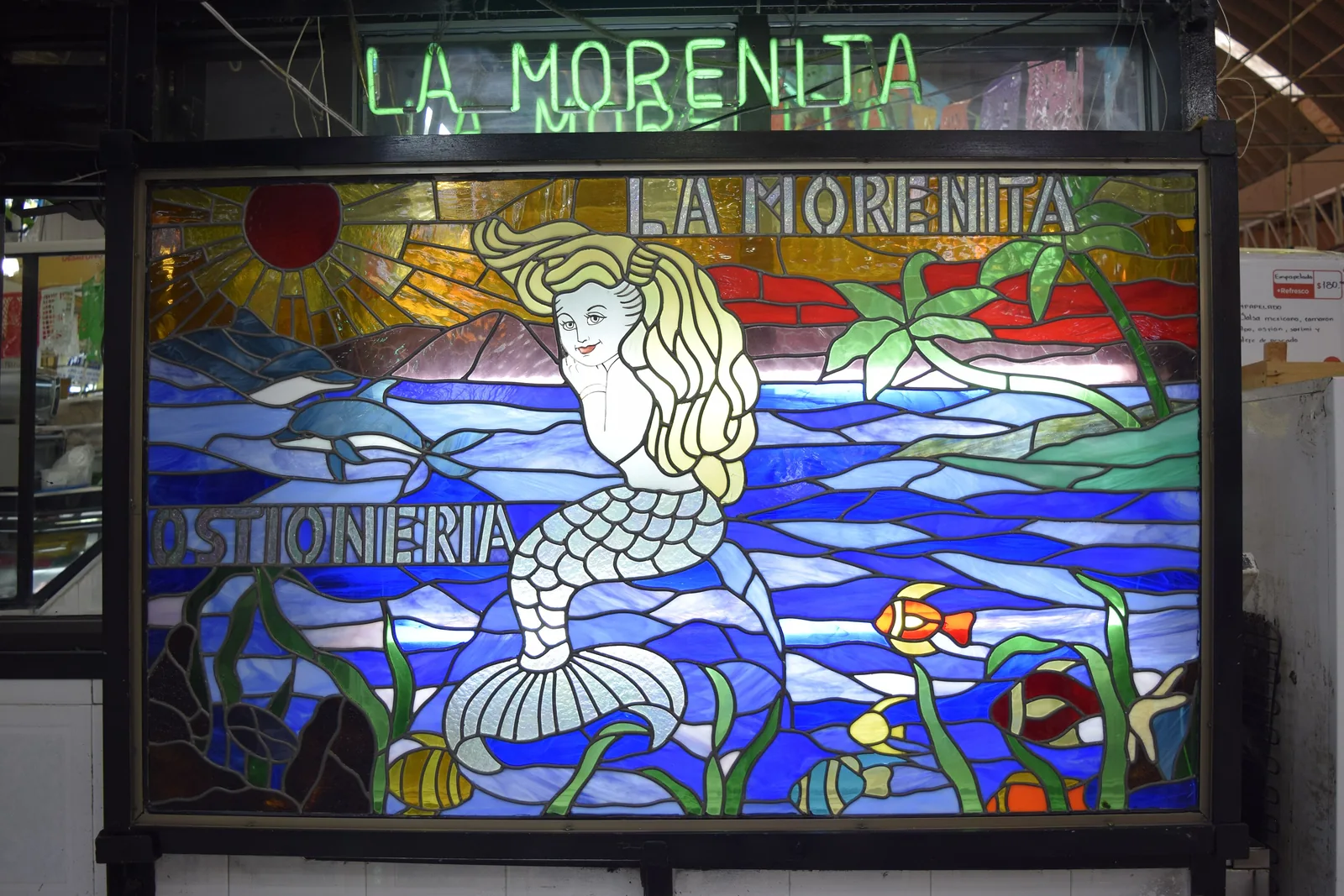
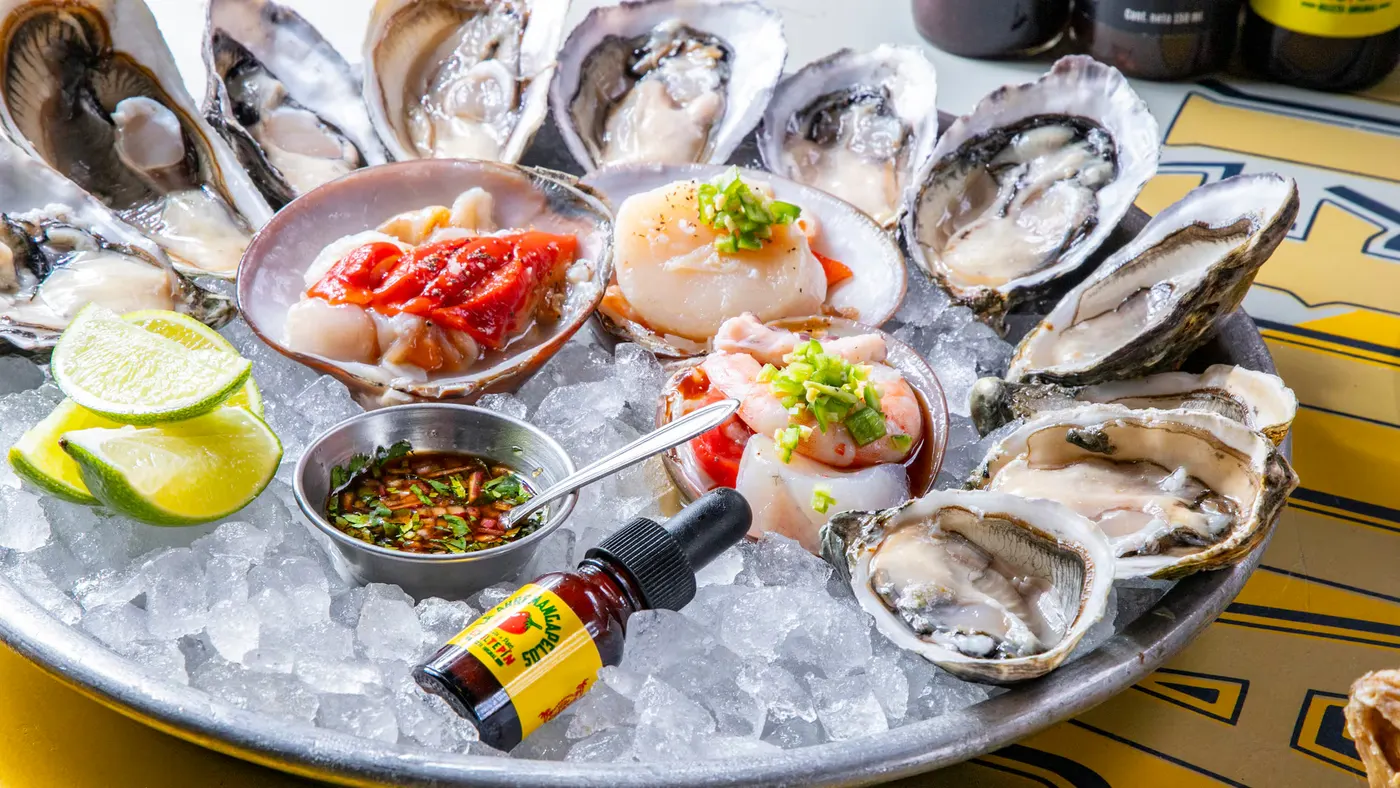
Eating is half the reason to come. The best-known seafood spot is La Morenita, an oyster bar with a stained-glass mermaid at the entrance, famous for its seafood cocktails, oysters, huachinango a la veracruzana (red snapper in tomato, olive and caper sauce) and paella. Los Canarios, another classic, serves arrachera steak, alambres, fish fillets and even sushi.
For food from the Yucatán, Moloch serves cochinita pibil (slow-roasted achiote pork) with sopa de lima, panuchos and tacos, plus chamorro pibil on weekends. In the fonda area near the Coahuila entrance there are lunch counters serving comida corrida, the set lunch of soup, rice, a main and a drink, and upstairs you'll find Yucatecan and Central American cooking.
For dessert, look for Cuban-style ice cream and Colombian helado de nata. Stalls change over the years; if one is gone, ask in the aisle, since the vendors all know each other.
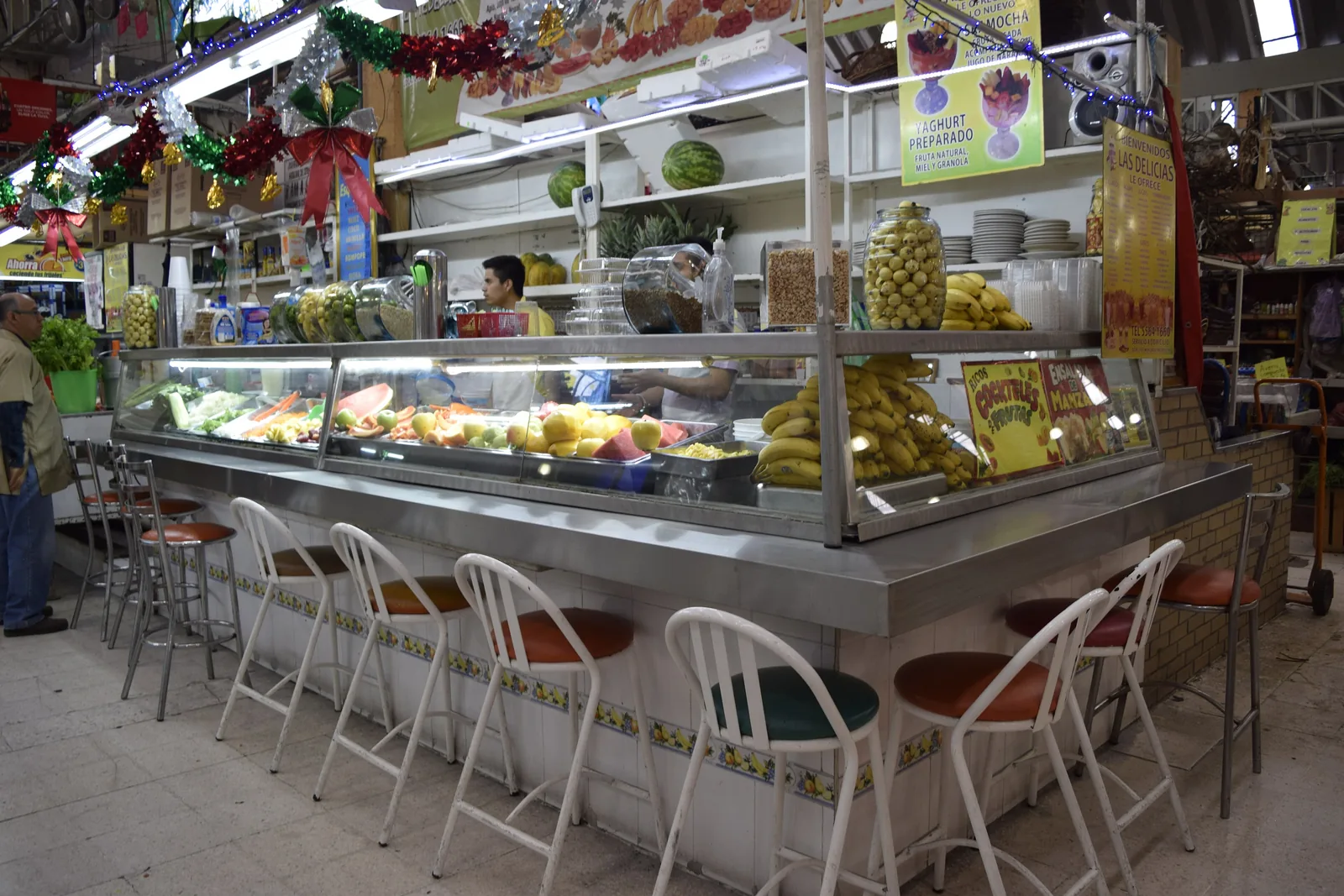
Juices, smoothies and fruit cups
The juice bars are breakfast for half the neighborhood: counters with tall stools where they make a green juice, a banana licuado or a fruit cup with granola and honey while you wait. It is a cheap, filling way to start a morning in the market.
There is also Colombian coffee brewed on the spot, drunk standing up while you shop. If you go early, start here.
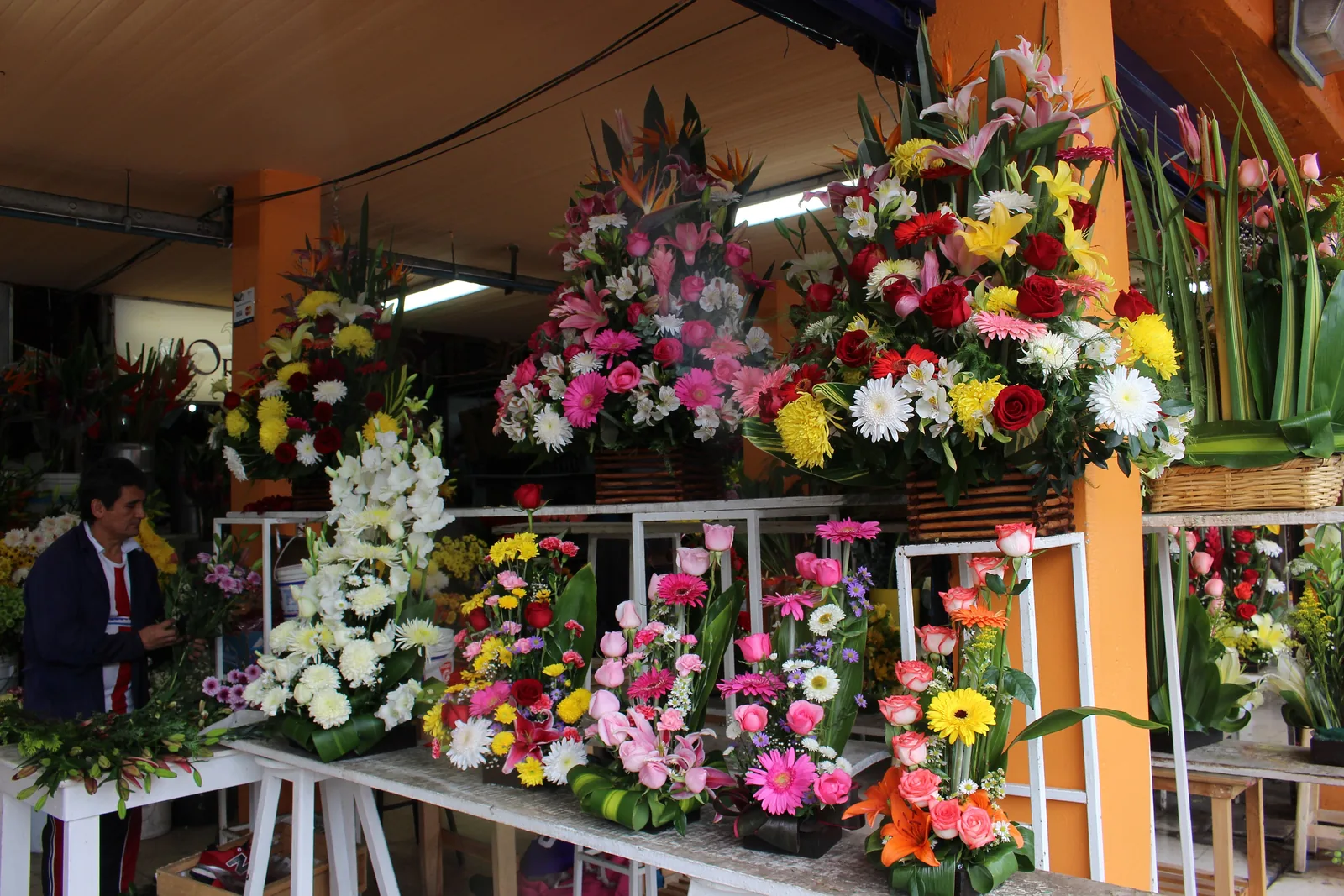
Flowers and plants
The flower section is one of the prettiest parts of the market: gift arrangements, roses by the dozen, orchids and seasonal blooms at market prices, far below a neighborhood florist. There are also stalls with houseplants, pots and soil.
If you just moved to Roma or Condesa, this is where to fill your apartment with plants without overspending.
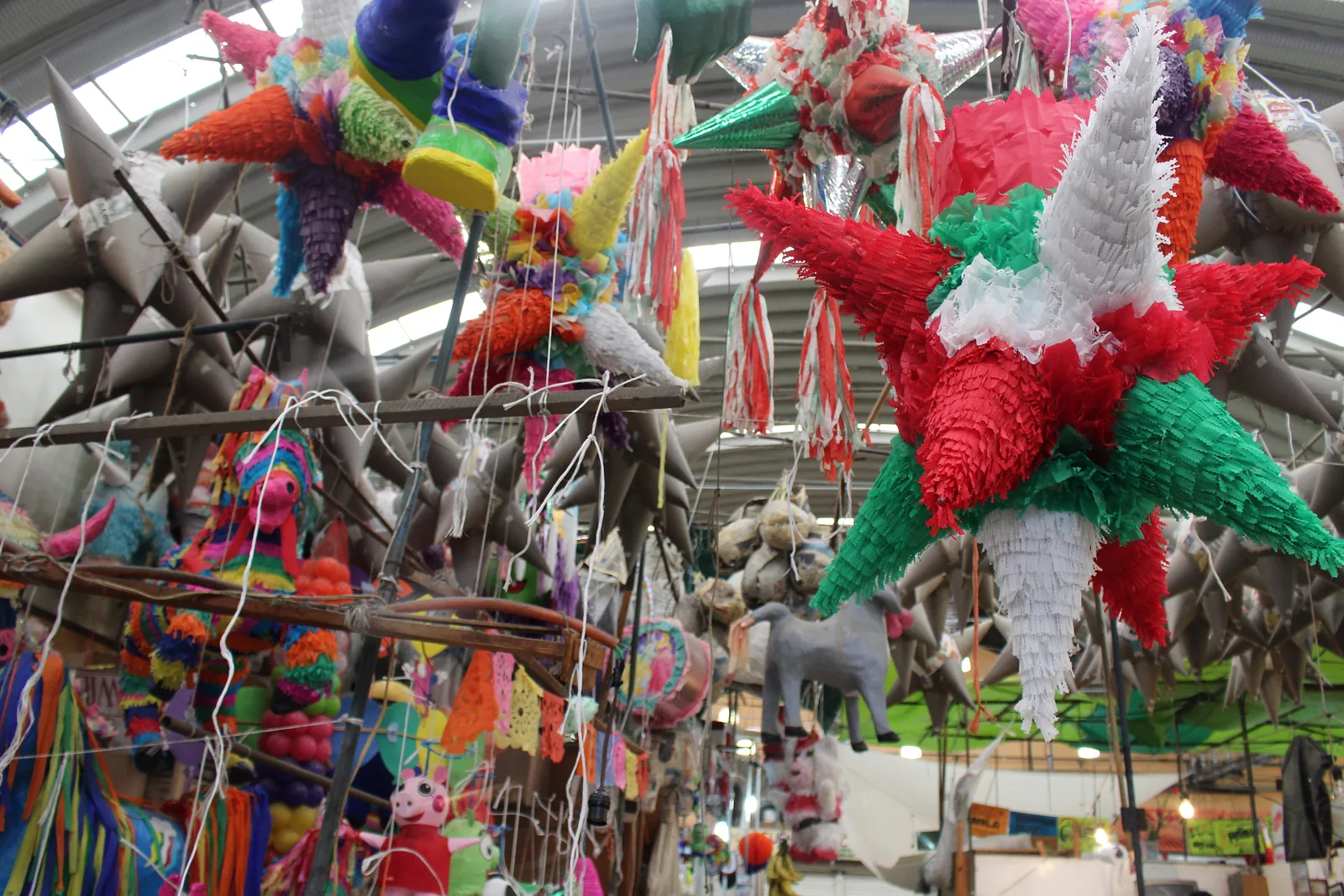
Piñatas, papel picado and the seasons
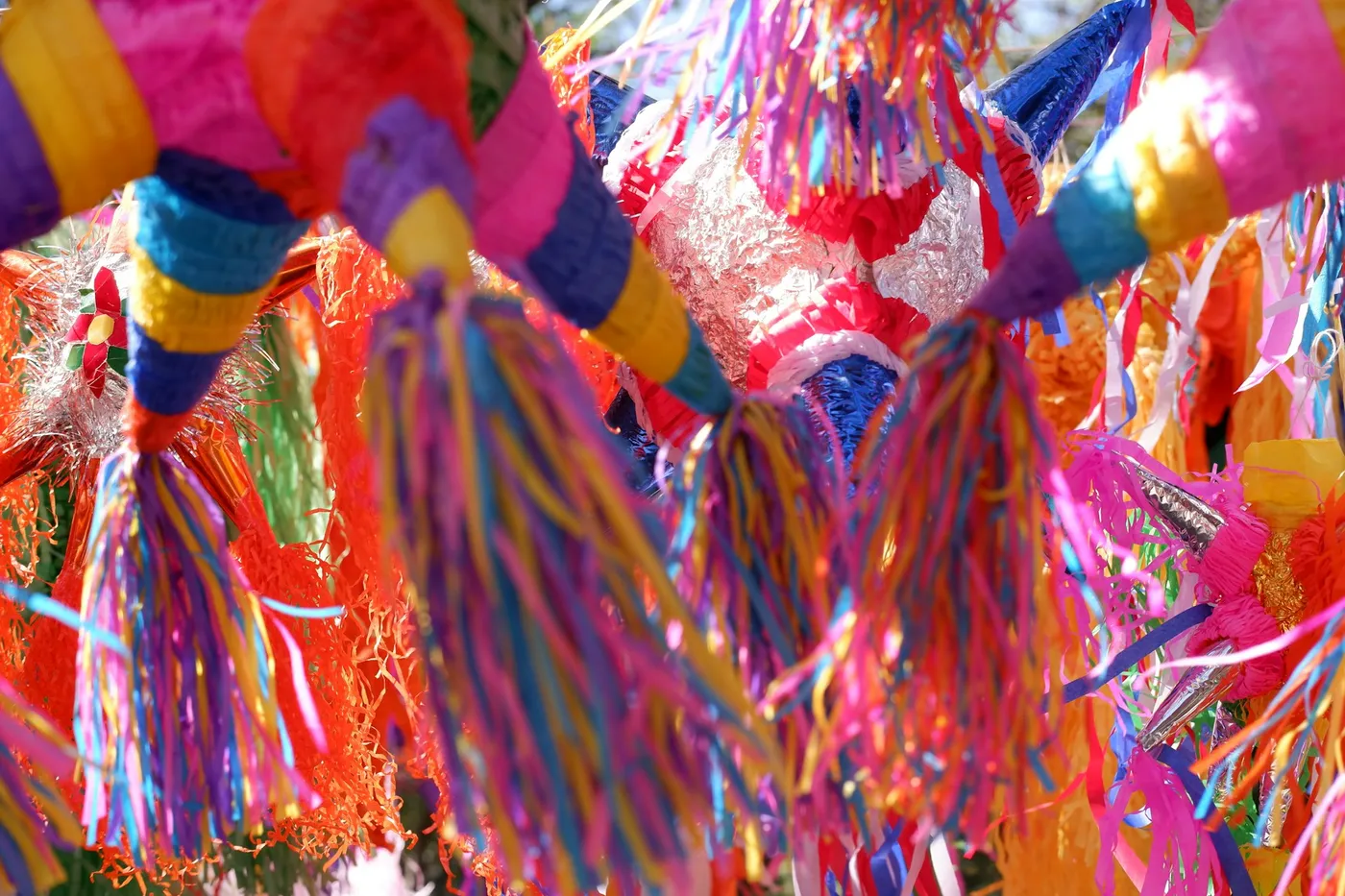
The piñata stalls carry cardboard and clay-pot piñatas in every size, from the classic seven-point star to whatever character is popular this year, plus bulk candy and party supplies.
The market changes with the calendar. In September it fills with flags and Independence Day decorations; in October and November, with papel picado and cempasúchil marigolds for Day of the Dead altars; and in December come poinsettias and the romería, a holiday street market along Calle Campeche with romeritos, salt cod, piñatas, trees and decorations for Christmas Eve dinner. The full calendar is in what is celebrated in December in Mexico.
Dried chiles, spices and the chile mill
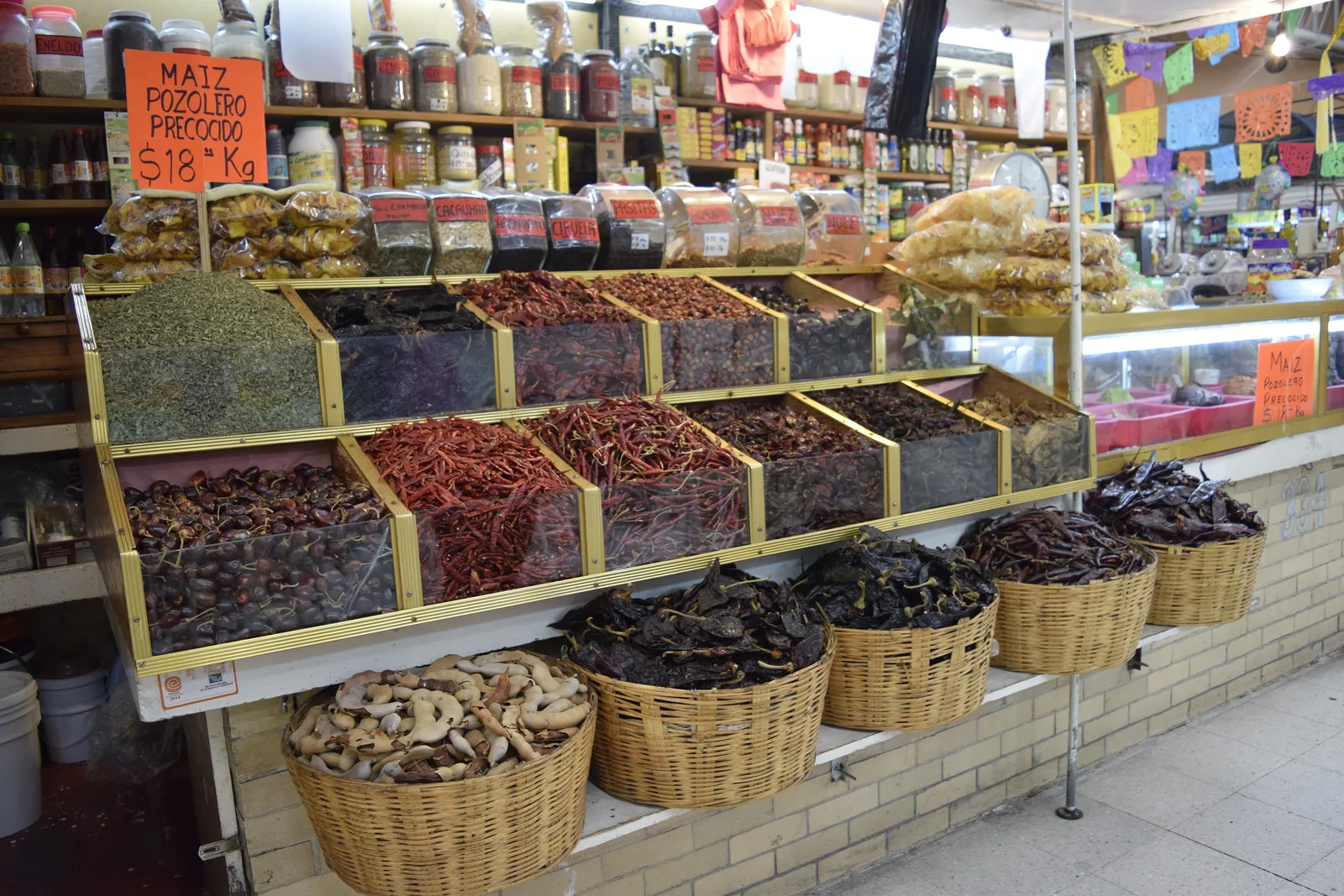
The dried chile stalls are some of the best stocked in the area: ancho, guajillo, mulato, pasilla, chipotle, morita and cascabel, plus pozole corn, seeds, cinnamon and mole pastes ready to dissolve at home.
Several have a mill: you buy the chiles and they grind them right there for mole or adobo. It is the kind of market service that is getting hard to find.
Butchers, seafood and deli counters
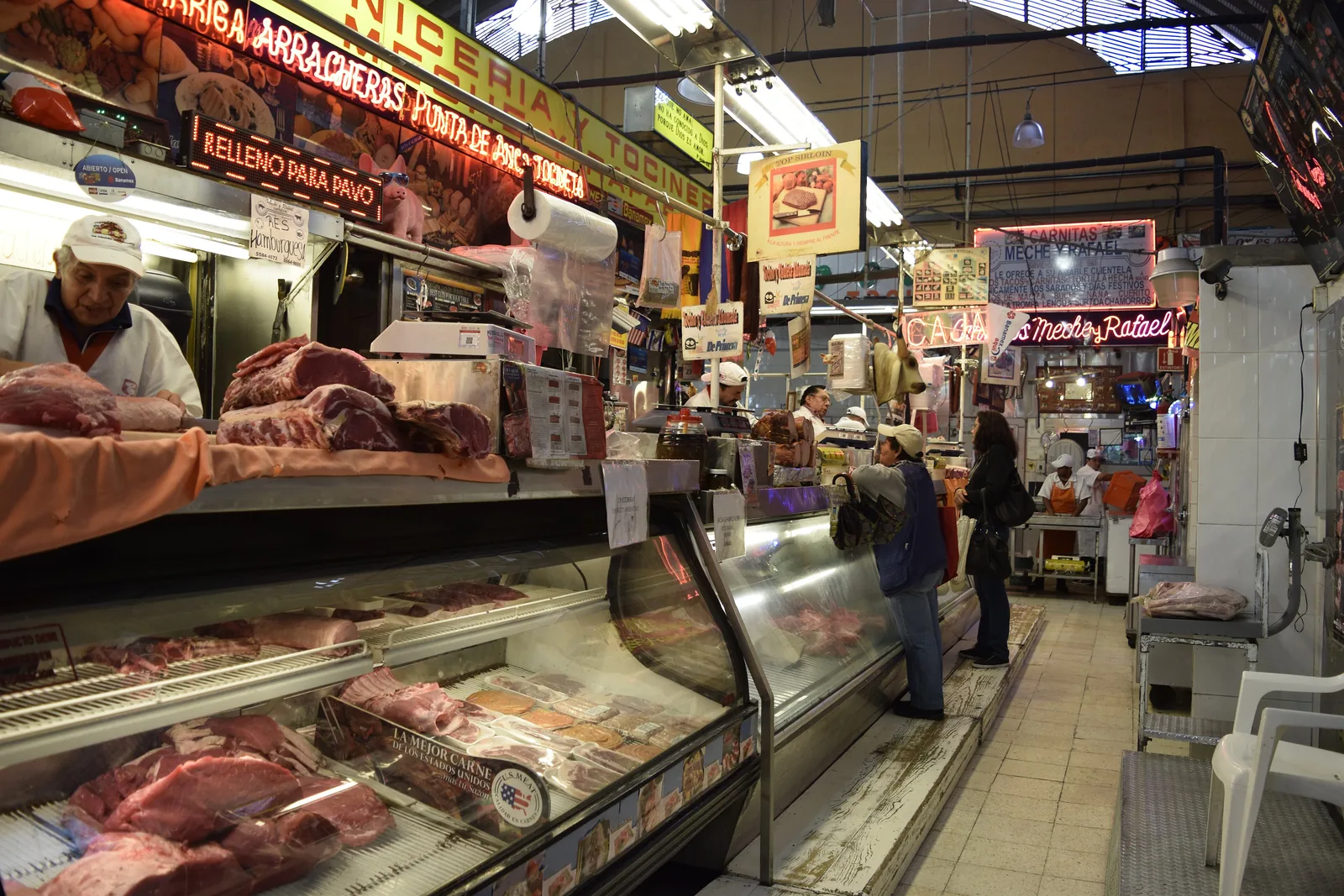
The butchers are one reason neighbors keep shopping here: beef, pork, lamb and veal, chicharrón, and butchers who cut to order, thin for bistec, thick for grilling or ground.
There are fishmongers with fresh fish and shellfish, and delis with serrano ham, Spanish and Italian-style cured meats and imported cheeses. For a cookout, you can get everything here.
Tips for visiting Mercado Medellín
A few things make the difference between a quick lap and a great morning:
- Bring pesos in cash, ideally small bills. Some stalls take cards, but most don't.
- Go on a weekday or early on Saturday. Sunday is family day and the aisles are packed by mid-morning.
- A little Spanish goes a long way: "¿Me da a probar?" (can I try some?) and "¿Cuánto cuesta?" (how much is it?) cover most of it.
- Ask and taste. Vendors will let you try fruit and explain how to cook anything you don't recognize.
- It is a busy, working market, so keep your phone and wallet in a front pocket, as you would in any crowded place.
- If you are looking for a specific import, ask at two or three stalls: prices vary and not everyone has the same stock.
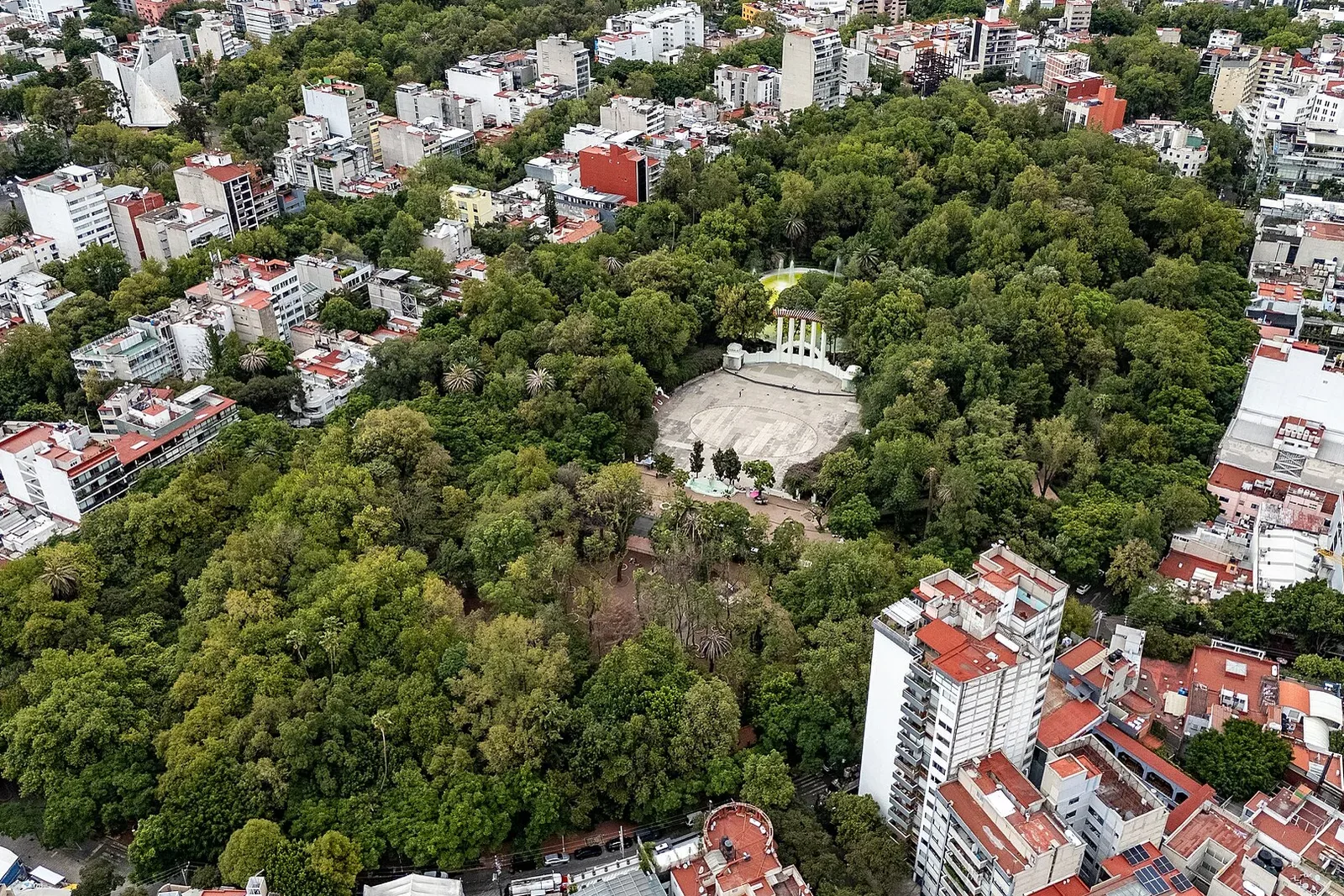
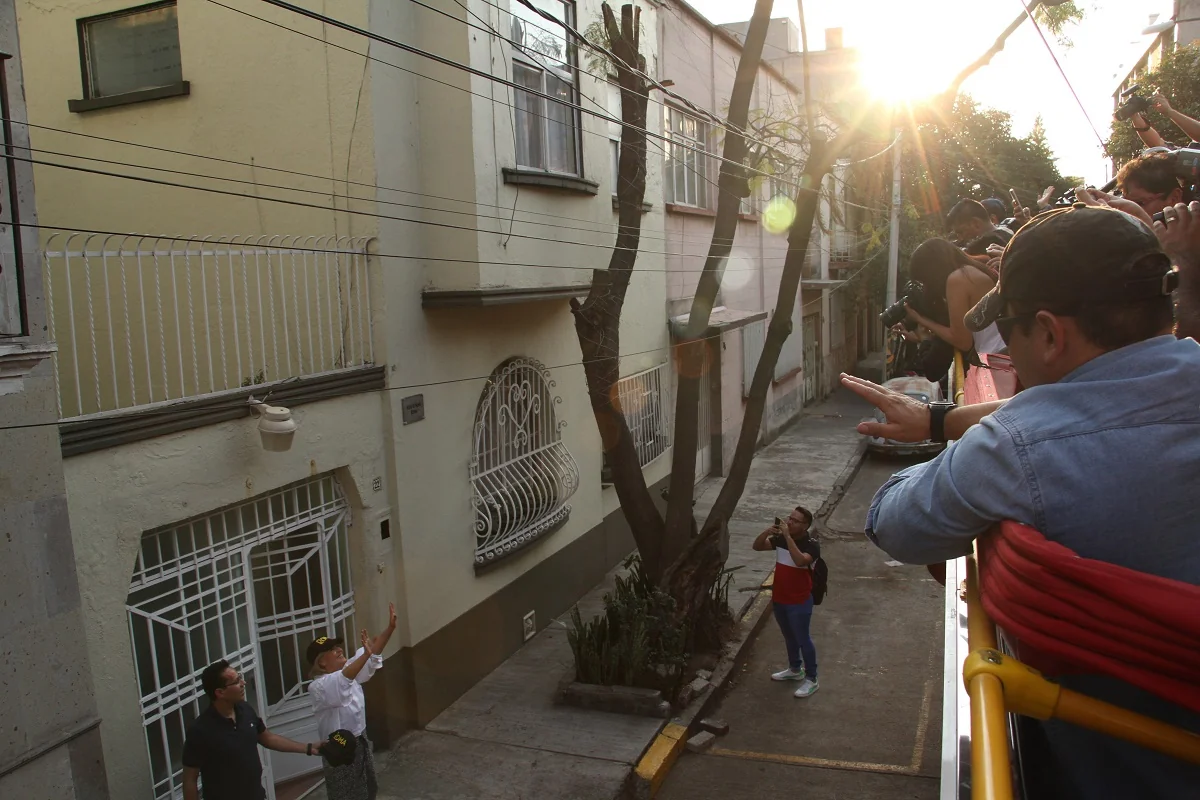
- Pair it with a walk through Roma Sur: a few blocks away are Tepeji 22, the house from Alfonso Cuarón's movie Roma, and the Jardín Ramón López Velarde.
Mercado Medellín vs. Mercado Roma
People mix them up because both are in Colonia Roma, but they are very different places. Mercado Medellín is a traditional public market; Mercado Roma is a private gourmet food hall at Querétaro 225, in Roma Norte, with restaurants and a bar.
| Mercado Medellín | Mercado Roma | |
|---|---|---|
| Type | Traditional public market | Private gourmet food hall |
| Neighborhood | Roma Sur | Roma Norte |
| Address | Campeche 101 | Querétaro 225 |
| Go for | Groceries, Latin American imports, home cooking | Eating and drinking out |
| Prices | Market prices | Restaurant prices |
Living near Mercado Medellín
Having Mercado Medellín a few blocks away is one of the best things about living in Roma Sur: fruit, meat, flowers and home-cooked lunch within walking distance, every day. It is part of why the neighborhood has become so popular with people moving to Mexico City, from long-stay remote workers to families.
In Roma Sur a two-bedroom apartment rents for around 32,000 pesos a month and sale prices average 58,500 pesos per square meter, 10% to 15% below Roma Norte and Condesa. The map shows the neighborhood's real boundaries and the apartments listed on the site; the market is at the northern edge, by Coahuila.
If you are looking, browse apartments for rent in Roma Sur, apartments for sale in Roma Sur or all apartments in Roma Sur.
Photos: Wikimedia Commons: Keizers (facade, CC BY-SA 3.0); CC BY-SA 4.0: Stellarc (cover, flowers and piñatas), Katia Flores Torres (imports), Stephanie Lopez (interior) and Estef93 (La Morenita, juice bar, chiles and butcher).
Frequently asked questions
Where is Mercado Medellín in Mexico City?
At Campeche 101, on the corner of Calle Medellín, in Colonia Roma Sur, Cuauhtémoc borough. It covers most of the block between Coahuila and Campeche.
What are Mercado Medellín's hours?
It opens every day, roughly 8 a.m. to 6 p.m. On Sundays many stalls close around 5 p.m.
Is Mercado Medellín in Medellín, Colombia?
No. Mercado Medellín is in Mexico City's Roma Sur neighborhood and is named after Calle Medellín, the street it sits on. It is known for selling Colombian and other Latin American products.
What is Mercado Medellín known for?
For products from all over Latin America, such as arepa flour, Colombian coffee and aguardiente, Venezuelan rum, Peruvian pisco and ají and Cuban malt sodas, plus its seafood counters, juice bars, flowers and piñatas.
Why is Mercado Medellín called Little Havana?
After the 1985 earthquake, vendors from Cuba, Colombia, Venezuela, Peru and other countries took over stalls and brought their products. It became Mexico City's Latin American market.
How do I get to Mercado Medellín?
Take Metrobús Line 1 to the Campeche stop and walk about five minutes east, or Metro Line 9 to Chilpancingo and walk about ten. In an Uber, ask for Campeche and Medellín.
Do vendors at Mercado Medellín take credit cards?
Some do, but most stalls are cash only. Bring pesos in small bills.
Is Mercado Medellín safe to visit?
Yes. It is a busy neighborhood market in a residential area, visited daily by locals and tourists. Take the usual care with your phone and wallet in crowded aisles.
Is Mercado Medellín the same as Mercado Roma?
No. Mercado Medellín is a traditional public market in Roma Sur; Mercado Roma is a private gourmet food hall at Querétaro 225 in Roma Norte.
Looking for a place around here
Keep reading


We'll tell you about what gets listed around here
If you're looking around here, leave your email and we'll write when something that fits comes in.
- Only what matches your search
- Rent, buy or pre-construction
- All 22 neighborhoods in the area